In response to the alarming numbers of children, Lebanese and Syrians at risk and outside the formal education system in Akkar governorate, “Al Hadatha” association proposes “Taalim” project that aims to support the national efforts in ensuring inclusive educational opportunities through equitable access to non- formal education to 3000 vulnerable Lebanese and Syrian children in host community. In specific, the project will ensure non-formal education opportunities (BLN and Retention support) for 3000 children in need, in addition to psychosocial support and case management services for the vulnerable children in Akkar one of the most marginalized areas in Lebanon hosting more than 30% of Syrian refugees in Lebanon.
With the increase in the numbers of refugees, a significant percentage of children remain without access to formal education or are in high risk of drop out. While the MEHE with the international and local actors are making efforts towards redressing this, the problems seem to relate to whether children can get to school, or there are parental restrictions due to of poverty, high cost of transportation, livelihood circumstances or a lack of commitment and awareness towards the importance of education. The children are being faced by the reality of dropping out of school, and in case they had the chance to enroll in formal education; are found themselves with school educational systems poor in applying child-centered practices and differentiation or in providing support in areas such as mental health, well-being, and trauma alongside the program content. This support is much needed especially that the children in Lebanon, either Syrian or Lebanese, have experienced trauma, conflicts, migration, displacement, and transition. The children’s mental health is threatened in a critical school age, where the child is expected to build the foundation of his personality and adulthood personality.
Hadatha perceives education as a fundamental human right and a life-saving intervention, and an educational community -based response to vulnerable children should be directly tackled.
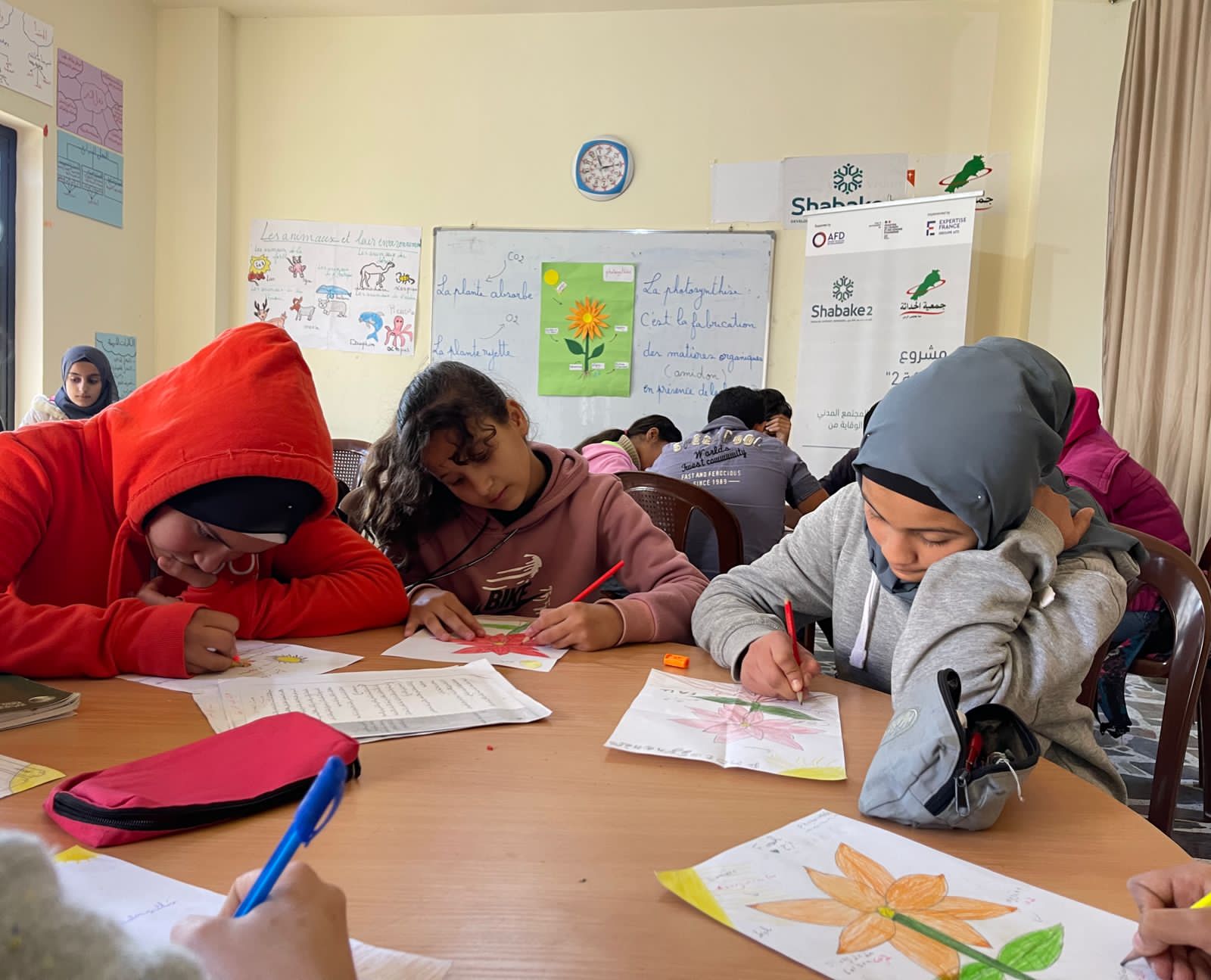
This project will provide vulnerable children, refugees, and Lebanese, aged between 6 and 16 years alternative flexible pathways. The project will offer enrolled children in schools a highly adaptable Retention Support (RS) program that is flexible to any settings and can take place in Hadatha community learning centers, as part of mobile teaching schemes, either in the morning or in the evening, depending on the child school schedule (morning or afternoon shift); and ensuring that personalized teaching methodologies are in place.
This project will provide vulnerable children, refugees, and Lebanese, drop out of the school system and aged between 8 and 14 years an alternative flexible pathway (Basic literacy and Numeracy). The aim of the BLN programming is to provide disadvantaged children the chance to return to school and to catch up with the formal educational system for those groups whose education pathways were interrupted because of poverty, conflict or violence so they can eventually catch up with the Lebanese educational system. The project will respond as well to the need of every child, either vulnerable or traumatized, with the provision of psychosocial support services. To sum up, the project will provide children with knowledge and skills responding to their needs to improve their quality of life.
Outputs:
Output 1: 40 volunteers 50% men and 50% women, 50% Lebanese and 50% Syrian, aged above 21 years old from Akkar targeted area, trained on community outreach techniques and on identification of children at risk.
Output 2: 1500 Lebanese and Syrian students enrolled in schools accessing Retention Support program, 50 % Lebanese and 50% Syrian; equally divided among gender, aged between 6 and 16 years.
Output 3: 1500 Lebanese and Syrian out of school students enrolled in BLN program, 30 % Lebanese and 70% Syrian; 40% Girls and 60% boys), aged between 8 and 14 years.
Output 3: 3000 children targeted in RS and BLN programming benefited from Psycho-Social Support (PSS) and social services and have access to relevant resources and including 145 who benefited from case management services.